
What inspired you to work in health in Africa?
My motivation to work in health in Africa is both deeply personal and shaped by my experiences across different health systems. Having been raised in Botswana with roots in Zambia, Africa has always been home, and my understanding of health and healthcare has been grounded in the realities of the communities I have lived and worked in. As a medical doctor practising in both Botswana and Zambia, I was struck not only by the clinical challenges, but by how many of the barriers to quality care were rooted in the way health systems are designed and delivered. In paediatrics in particular, I saw how children with additional or complex needs often faced gaps in care that went beyond medicine alone, ranging from access and coordination to how services are structured around them. These experiences shaped my desire to contribute in a way that goes beyond individual patient care, towards improving systems so that they are more inclusive, responsive, and equitable. My work, including co-founding an organization supporting children with special needs, continues to be driven by a commitment to address these gaps in a meaningful and sustainable way. For me, working in health in Africa is not just about place, but about responsibility, connection, and the opportunity to contribute to building systems that better serve the communities I am part of.
What is one success you’re proud of?
One success I am particularly proud of is co-founding Bupalo Children’s Centre in Zambia, an initiative focused on supporting children with special needs and their families. This began from recognising a significant gap in access to services for children who require more tailored and inclusive care. Many families faced not only limited resources, but also a lack of awareness and support systems.
Through Bupalo, we have worked to create a space that provides support through outreach programmes, advocacy, and promoting inclusive approaches such as music therapy. Beyond direct services, an important part of our work has been raising awareness and shifting perceptions around children with additional needs, helping to foster more inclusive attitudes within communities.What makes this particularly meaningful to me is that it reflects a shift from identifying a problem to actively building part of the solution. It has also shaped my broader approach to health, reinforcing the importance of designing systems and interventions that are responsive to the needs of those often overlooked.
What’s the hardest part of your work as a woman in health leadership? How are you tackling it?
One of the hardest parts of my work as a woman in health leadership has been learning to step into spaces where I have not always felt I fully belonged. At different points in my training and career, I have experienced moments where I questioned whether I truly belonged in certain academic, clinical, or leadership environments, despite having worked hard to be there. This has often been less about explicit barriers and more about internalised hesitation and the subtle feeling that permission is required to take up space.
I have been learning to address this by consciously choosing to show up anyway, applying for opportunities even when I am uncertain, speaking up in rooms where I might otherwise have stayed quiet, and reminding myself that presence is not something that has to be granted, but something I am allowed to claim through my work and preparation.Supportive mentors and peers have also played an important role in reinforcing this shift in mindset. Over time, I have come to see leadership not as a fixed position, but as something that grows through continued participation, even in uncomfortable spaces.
What change do you want to see in the next 5 years?
In the next five years, I would like to see more equitable and responsive health systems for children, particularly in settings where access to specialised care remains limited. In many contexts, challenges in paediatric care are not solely clinical, but are shaped by how services are designed, coordinated, and delivered. I am especially interested in seeing greater attention given to children with additional or complex needs, including neurodivergent children, who are often underserved by existing systems. I would also like to see a continued shift in how leadership in health and research is shaped, with more professionals from diverse backgrounds actively participating in the design of solutions, not just the implementation of them. Representation matters not only for visibility, but because it influences the kinds of questions that are asked and the priorities that are set. More broadly, I hope to see stronger connections between research, clinical practice, and community realities, so that innovations in health are not only technically sound, but also contextually relevant and accessible to the populations they are intended to serve.
What advice do you have for women chasing their dreams working in health?
My advice to women pursuing careers in health is to trust that you do not need perfect confidence or perfect clarity to begin. Many of the spaces you will grow into may initially feel unfamiliar or intimidating, but that does not mean you do not belong in them. I have learned that growth often comes from stepping forward even when there is uncertainty, and allowing experience to build confidence over time rather than waiting for it to arrive first. It is also important to actively seek out mentors and supportive communities. Relationships with people who can encourage, challenge, and guide you can make a significant difference, especially in environments where you may feel isolated or unsure. At the same time, learning to trust your own voice is just as important as external validation.Finally, I would encourage women not to limit themselves by how they currently see their path. Some of the most meaningful opportunities come from being open to unexpected directions and allowing your career to evolve beyond what you initially imagined. Progress in health is rarely linear, but persistence and curiosity are powerful anchors.
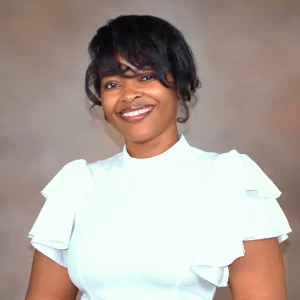
Dr Lengwe Sinkala is the first Gates Cambridge Scholar from Botswana and will pursue a PhD in Engineering.